

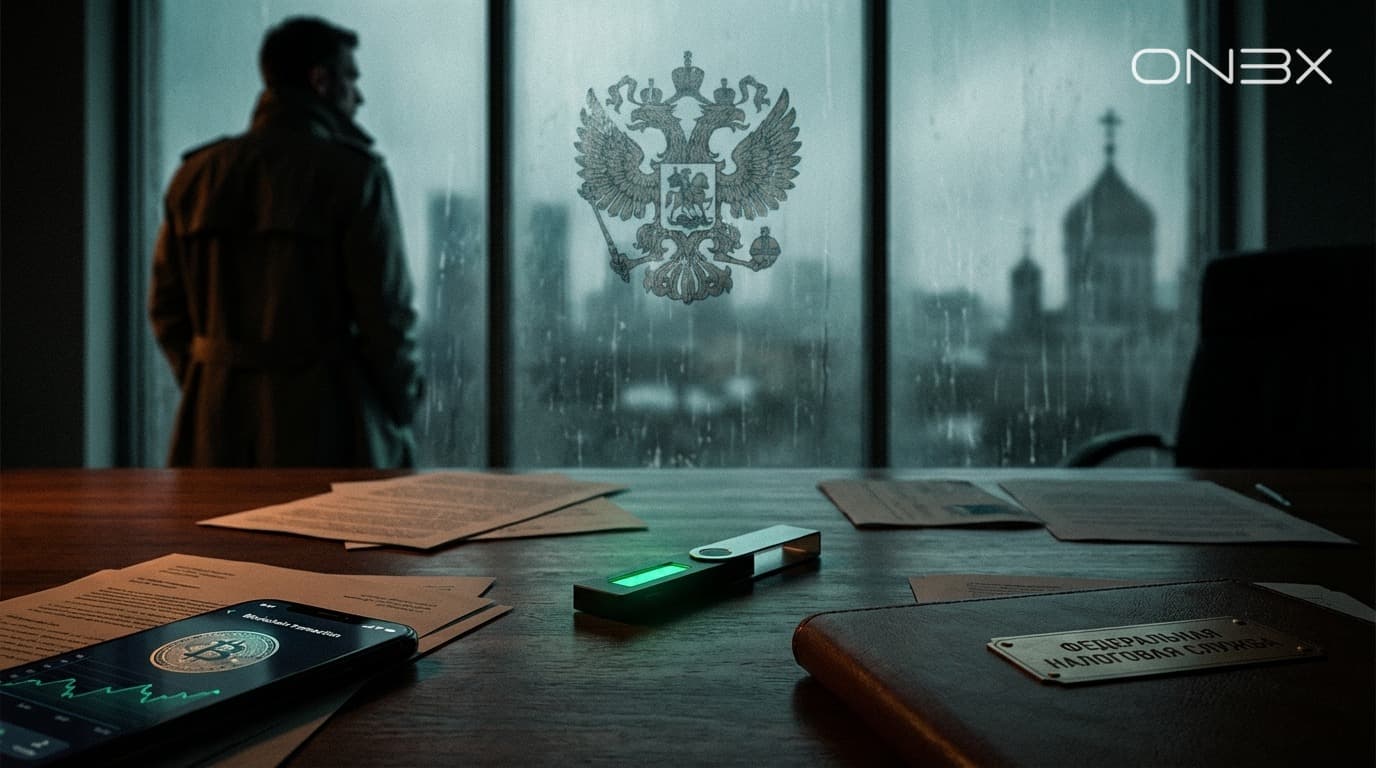
Big Brother Crypto: Russia Wants to Know About Every Wallet
Russia is about to implement one of the world's most rigorous regulations for cryptocurrency tracking. A new bill requires all residents of the country to declare to the Federal Tax Service (FNS) the opening, closing, and transactions conducted on crypto wallets hosted abroad.
The measure, which comes into effect on July 1st, 2026, is part of a broader Russian strategy to control the flow of crypto capital amid the war with Ukraine and international sanctions that restrict the country's access to the global financial system.
What the Law Requires
The requirements are comprehensive and detailed:
Mandatory declaration: Permanent residents in Russia must notify the FNS about the opening or closing of any crypto wallet hosted abroad within 30 days of the event.
Transaction reporting: All transactions conducted on foreign wallets must be reported to tax authorities, including purchases, sales, transfers, and receipt of cryptocurrencies.
Exemption limit: Individuals and legal entities are required to inform tax authorities when the value of any crypto activity exceeds 600,000 rubles (approximately US$ 6,500) in a calendar year.
Taxation: Bitcoin miners will pay between 13% and 15% tax on mining revenue. Traders and investors are also subject to taxation on gains.
Why Now?
Russia's motivation is threefold:
1. Capital flight: Since the beginning of the war in Ukraine and Western sanctions, Russian citizens and companies have used cryptocurrencies to move wealth out of the country. Mandatory declaration aims to map these flows.
2. Tax revenue: With the economy under pressure from sanctions, the government needs new revenue sources. Crypto taxation is one of them.
3. Sanctions enforcement: Authorities want to ensure that cryptocurrencies are not used to circumvent international sanctions that restrict Russian financial transactions. Ironically, as we reported, the ally Iran is using USDT for exactly this purpose in the Strait of Hormuz.
Russian Paradox: Regulation vs Utilization
Russia's position regarding cryptocurrencies is contradictory. On one hand, it tightens internal regulation with mandatory declaration and taxation. On the other, Russia's own Central Bank recognizes the role of cryptocurrencies in foreign trade and allows residents to buy crypto through foreign accounts.
This duality reflects a real dilemma: Russia needs crypto to circumvent sanctions in international transactions, but does not want to lose control over internal capital flow. The solution is to allow external use while monitoring domestic use.
Penalties and Enforcement
Starting July 1st, 2027, illegal cryptocurrency intermediation in Russia will be subject to penalties comparable to those of illegal banking activity — one of the most serious financial offenses in the Russian penal code.
In practice, this means that exchanges and P2P platforms operating in Russia without authorization may face criminal prosecution, not just administrative fines.
Global Comparison
Russia is not alone in this move. Other countries are also tightening their grip:
- USA: The IRS has already required crypto asset declaration in tax forms since 2024
- Brazil: The Federal Revenue Service monitors crypto transactions above R$ 35,000/month since 2019, and the Federal Police blocked R$ 934 million in a recent operation
- Europe: The MiCA regulation requires complete KYC on all transactions
- India: 30% tax on crypto gains and 1% TDS on all transactions
The global pattern is clear: the era of anonymous crypto is coming to an end. Governments across all political spectrums are converging on the same objective — to track and tax crypto transactions.
What This Means for You
If you operate with crypto in any country, the trend is that similar regulations will arrive (or already have) in your jurisdiction. The recommendation is:
- Keep detailed records of all crypto transactions
- Declare your assets according to local legislation
- Consider consulting an accountant specialized in crypto assets
- Prefer regulated exchanges that already comply with compliance requirements
Disclaimer: This content is informational and does not constitute tax or legal advice. Consult a qualified professional for specific guidance.