

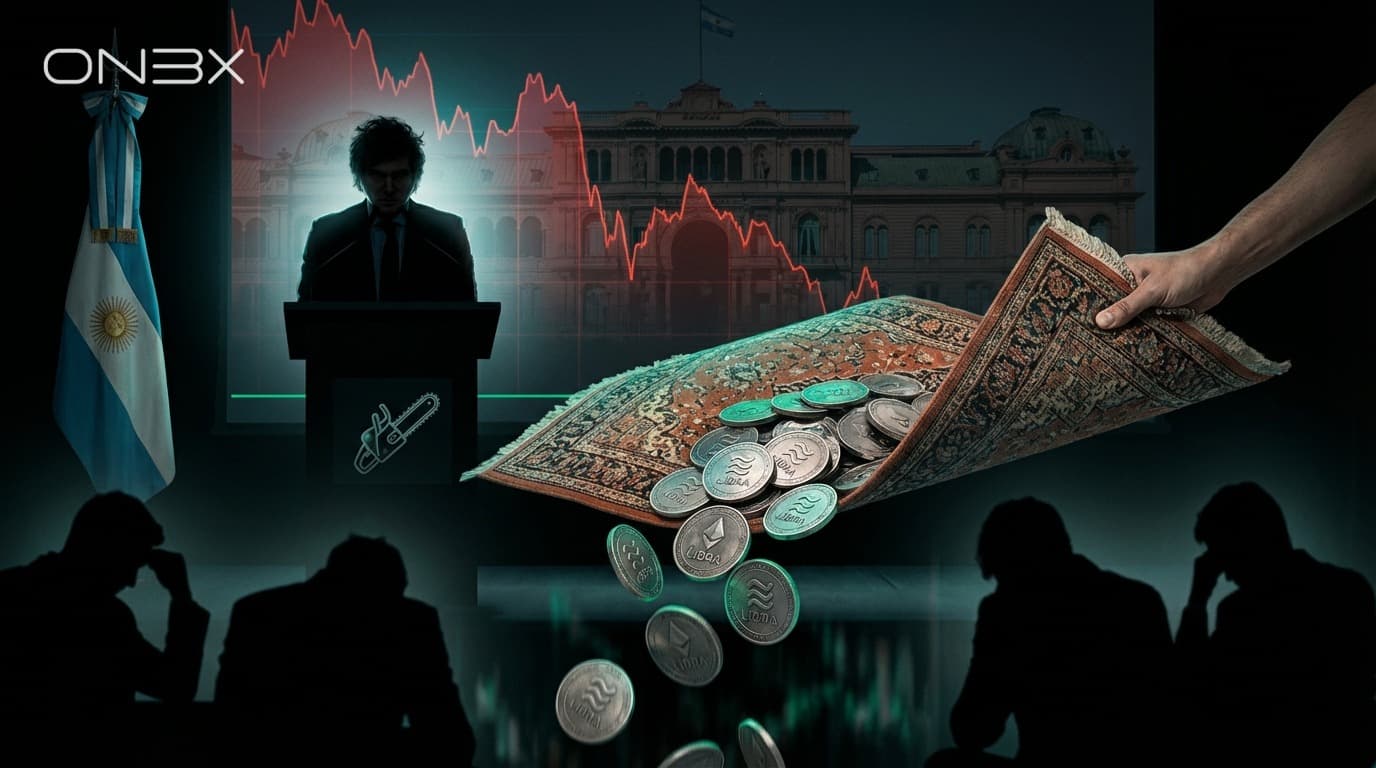
The LIBRA Ghost Returns to Casa Rosada
On April 7, 2026, the New York Times published a bombshell report that reignites one of Latin America's biggest political and crypto scandals: call and message records from Argentine President Javier Milei show frequent communication with Mauricio Novelli, a businessman pointed to as the architect of the LIBRA token — the $250 million rug pull that occurred in February 2025.
The publication of call logs, obtained by the American newspaper through sources connected to the investigation, suggests "recurring payments" and "potential financial arrangements" between Milei and Novelli. The president has not been formally charged, and the content of the calls remains unknown. But the temporal pattern of the contacts — concentrated around the launch and collapse of LIBRA — is difficult to explain as coincidence.
A Reminder: What Was LIBRA
On February 14, 2025, Javier Milei posted on X promoting a token called $LIBRA, describing it as an initiative to "foster growth in the Argentine economy by funding small businesses and startups". The post included the contract address on Solana.
In the hours that followed:
- The token jumped from fractions of a cent to $4.56, reaching a market cap close to $4 billion
- Insiders with early access dumped their positions at the top
- The price plummeted 95% in less than 6 hours
- $250 million in net losses for retail investors
- Milei deleted the post hours later, claiming he had no knowledge of the project details
It was characterized by the international press as one of the largest rug pulls involving a public figure in crypto history. Comparable only to the FTX/Bankman-Fried case in terms of political resonance.
What Changed with the Call Logs
Milei's defense has always relied on a narrative of operational distance: the president claimed to have been merely an enthusiast who "retweeted" an idea without deeply knowing the promoters. The call records partially dismantle that narrative.
What the Records Show
According to the NYT:
- Multiple calls between Milei and Novelli in the days before LIBRA's launch
- Additional contacts on the day of the promotional post
- Continued communication after the token's collapse
- Circumstantial indications of recurring payments between the parties (details not disclosed)
Who Is Mauricio Novelli
An Argentine businessman with a background in the technology and events sector, Novelli had previously been investigated in relation to other short-lived cryptocurrency projects. Witnesses and documents obtained by Argentine prosecutors describe a pattern of short-lived tokens, heavy marketing, and coordinated exit liquidity.
The Investigation in Argentina
The case has been running through Argentine federal courts since February 2025. Prosecutor Eduardo Taiano is leading the investigation into possible crimes of:
- Fraud against investors
- Money laundering
- Abuse of authority
- Bribery (if payments are confirmed)
There is also a special parliamentary commission investigating the episode, although its progress has been hampered by political disputes. The ruling party argues it is an "irresponsible message on social networks", while the opposition (Kirchnerism and part of PRO) seeks to characterize it as "association for wrongdoing".
Impact on the Argentine Crypto Market
The scandal comes at a delicate moment. Argentina is in the midst of a process of re-legitimization of crypto at the institutional level, with the Central Bank (BCRA) about to allow banks to offer cryptocurrency services and the CNV approving tokenization frameworks. The risk is clear: associating "crypto" with the president's tarnished image could delay constructive regulatory agendas.
Tragic irony: Argentina is the country with the highest crypto adoption in Latin America (20% of adults), used daily by ordinary citizens to protect themselves from inflation. LIBRA is the opposite of that — predatory speculation with victims predominantly international.
Political Implications
For Milei, the timing is terrible. With falling popularity after two years of severe fiscal adjustment, the LIBRA case offers ammunition for the opposition and makes parts of the libertarian base uncomfortable. Current questions:
- Can the Argentine Congress open a juicio político (impeachment) process?
- Will the Justice formally indict after these new developments?
- Is a banking secrecy breach on the radar to track possible payments?
The International Angle
American and European investors who lost money on LIBRA have already filed class actions in the US. If a financial connection between Milei and Novelli is proven, the case could escalate to international civil lawsuits and even criminal actions by the SEC/DOJ — with diplomatic immunity likely waived in the request.
The most obvious parallel is the Trump Meme Coin episode from early 2025, but with a critical difference: Trump always maintained explicit operational distance from the project. In Milei's case, the call logs are beginning to eliminate that distance.
Conclusion: The Hangover of Crypto Libertarianism
The LIBRA scandal is one of the clearest cases of the toxic fusion of populism, social media, and crypto speculation. Politicians lend legitimacy to pump-and-dump schemes in exchange for access and funding; operators use political capital to accelerate launches; retail investors pick up the tab.
For Argentina, the path forward depends on three things: (1) that the investigation advances with independence, (2) that the positive regulatory agenda is not contaminated by the scandal, and (3) that the country finds clear separation between crypto as a monetary protection tool (which works there) and crypto as a political instrument (which should not exist anywhere).
Disclaimer: This content is informational and based on public reports. President Javier Milei has not been formally charged with any crime. Investigations are ongoing.