

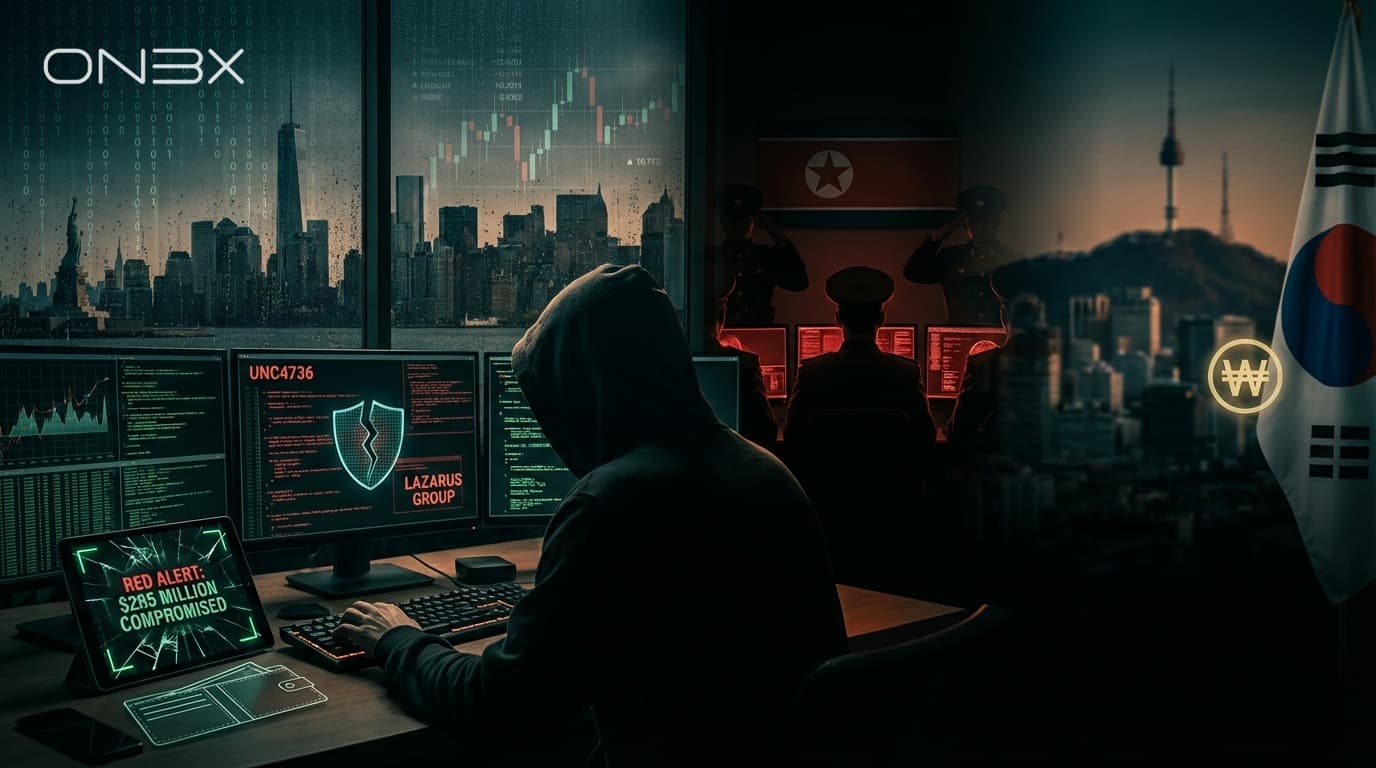
From Crypto Conference to Exploit: The Anatomy of an Intelligence Operation
On April 5, 2026, Drift Protocol published a detailed post-mortem of the $285 million attack suffered on April 1st. The disclosure shifts the narrative: it was not an opportunistic exploit, it was a six-month intelligence operation conducted by a North Korean state-sponsored group with the codename UNC4736 — also known as AppleJeus, Citrine Sleet, Golden Chollima, and Gleaming Pisces.
To date, this is the largest DeFi hack of 2026. And it is also a masterclass on how current-era crypto crime looks far more like traditional espionage than code vulnerability breaches.
The Complete Timeline
Fall 2025: First Contact
The official beginning was at a major crypto conference in the second half of 2025. UNC4736 agents, presenting themselves as representatives of a quantitative trading firm, approached Drift Protocol contributors. The pitch: integrate automated trading strategies via the protocol's Ecosystem Vaults system.
This is the critical detail that distinguishes the operation from conventional attacks. The hackers did not breach the security perimeter — they offered to enter through the front door as legitimate partners.
December 2025 – January 2026: Formal Infiltration
The group completed the Ecosystem Vault onboarding process, filling out forms with strategy details. During this phase:
- They demonstrated deep technical knowledge, asking sophisticated questions about the product
- They deposited over $1 million of their own funds — a "skin in the game" demonstration that eliminated initial suspicions
- They built personal relationships with multiple contributors via Telegram, Discord, and calls
- They gradually integrated into the protocol's daily operations
February – March 2026: Escalation
With their position established, came the compromise vectors:
Vector 1 — Malicious Code via "Frontend Deployment"
The group shared a Git repository with a contributor, claiming it was a customized frontend for their vault. Upon cloning and executing the code locally, the contributor was compromised — malware established persistence on the operating system and began exfiltrating keys and credentials.
Vector 2 — Weaponized TestFlight
With a second contributor, the tactic was even more sophisticated. The group presented a "beta version" of an app via Apple TestFlight, describing it as the "wallet product" the firm was building. Upon installing the app, the contributor compromised their own device — and the environment where they kept sensitive keys.
The use of TestFlight is particularly insidious: Apple's system conveys a false sense of security (review, digital signature, Apple ID). But betas can be distributed with malicious code if Apple reviewers do not detect dormant behavior.
April 1, 2026: The Execution
With sufficient access to Drift's internal infrastructure, the group executed the attack we analyzed in detail in the previous coverage: 31 transactions in 12 minutes, draining $285 million in multiple assets, use of durable nonce accounts, and oracle manipulation via fake token (CarbonVote).
Who Is UNC4736
The group, tracked by multiple threat intelligence firms (Mandiant, Microsoft, Google TAG), is one of the most active units of North Korea's cyber apparatus. Its codenames reflect how each research organization maps it:
- AppleJeus: historical name, used since Trojan horse campaigns in crypto trading apps (2018+)
- Citrine Sleet: Microsoft taxonomy
- Golden Chollima: CrowdStrike taxonomy
- Gleaming Pisces: Palo Alto Networks taxonomy
All these designations point to the same state actor linked to the DPRK's Reconnaissance General Bureau (RGB) — the intelligence agency that also oversees the infamous Lazarus Group.
Why This Matters to All of DeFi
The New Normal: Infiltration, Not Invasion
For years, the DeFi hack narrative was "smart contract bug" or "multisig failure". Drift represents a brutal evolution: human-chain attacks that exploit administrative processes, interpersonal trust, and collaboration tools. Well-audited code does not protect against this.
Ecosystem Vaults As a New Vector
Protocols that allow third parties to integrate strategies will need to drastically rethink partner due diligence. Questions that were not standard:
- Real identity verification of operators (partner KYC)
- Fund analysis — capital origin of mysterious "quant firms"
- Industry reference due diligence
- Exposure limits per new partner
- Isolated sandbox for shared code or apps
Operational Security for Contributors
For developers working on DeFi protocols:
- Never clone repositories from unverified contacts on machines with key access
- Use air-gapped machines or disposable VMs to test external code
- Be suspicious of TestFlight invites from third parties — even if they appear legitimate
- Real multi-sig with hardware wallets on each signer — compromising 1 out of 5 should not provide sufficient access
- 24-48 hour timelocks on administrative operations
Is the Money Gone?
The aftermath of Drift's collapse boils down to a race against time:
- A significant portion was converted to USDC — Circle has already frozen identified addresses
- Some became SOL and ETH, with cross-chain flows via known bridges
- Tether is under pressure to freeze stolen USDT ($5.6 million)
- Laundering patterns consistent with mixers, peer-to-peer OTC, and eventual conversion to fiat through Asian exchanges
Preliminary estimates suggest that 30-50% of funds will be recovered or frozen. The remainder will likely enter the same channel that has financed the $6+ billion stolen by DPRK since 2017 — sustaining nuclear and missile programs.
Regulatory and Market Response
The Drift case accelerates three conversations:
- DeFi security as a regulatory priority: SEC, OFAC, and European counterparts discuss minimum security framework requirements
- Stablecoins and freezing power: reinforces the argument that centralized issuers (Circle, Tether) have a systemic role — both positive (freezing theft) and concerning (censorship)
- International anti-DPRK cooperation: US Treasury (OFAC), South Korea (FIU), and Japan coordinate sanctions on identified addresses
Conclusion: The Era of Human Hacks
Drift Protocol is the most instructive case of the new generation of threats. There is no firewall that stops a social engineer who spends six months building trust. There is no audited smart contract that resists a compromised administrative key. And there is no whitehat who can reverse funds that have already crossed five bridges and three mixers.
The lesson for the ecosystem is uncomfortable, but necessary: DeFi must professionalize operational security to the level of traditional financial firms. Partner background checks, internal compliance, access segregation, attack simulation. The era of "trust but verify" is turning into "never trust, always verify" — and the cost of not learning this is measured in hundreds of millions.
Meanwhile, group UNC4736 has likely already begun its next six-month cycle at some other crypto conference. The weapon is patience. The goal is funding missiles. And Drift will not be the last.
Disclaimer: This content is informational and based on official Drift Protocol communication and public analysis from threat intelligence firms. It does not constitute investment recommendation.